
Snowmobiling in Zakopane: What to Expect and When to Go
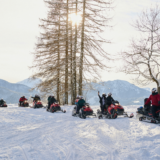
Zakopane likes to call itself the winter capital of Poland, and most people who arrive in January assume that means skiing. It does, but not only. For anyone who doesn’t ski, hasn’t skied in years, or simply wants to see the Tatras from somewhere other than a chairlift queue, a snowmobile is one of the most direct ways into the winter mountains. You get an hour of engine noise, cold air and wide white slopes, and then, when the engines cut out at a stop, a silence you never get in town.
This guide covers what snowmobiling in Zakopane is like, where it happens, when the snow is most reliable, what to wear, and how to turn a morning on the snow into a full winter day.
Where you can ride, and where you can’t
The first thing worth knowing is that you won’t be riding into the high Tatras themselves. Almost the entire Polish side of the range sits inside Tatra National Park, and motor vehicles aren’t allowed there at all, snowmobiles included.
Instead, rides around Zakopane happen on the opposite side of town, on the Gubalowka range and the rolling hills towards Koscielisko. That sounds like a compromise, but it works in your favour. Gubalowka’s ridge sits at around 1,120 metres, directly facing the main Tatra ridge, which is exactly why it’s the town’s classic viewpoint. Riding up there keeps the mountains in front of you for most of the trip, including Giewont, the peak whose outline locals will tell you looks like a sleeping knight.
It’s also worth knowing that snowmobiles and quads are a sore point for some locals. Podhale’s councils have asked lawmakers for tighter rules on off-road vehicles, citing damage to the land and trouble with private property. It’s a good reason to choose a reputable, long-established operator over an unknown one. Experienced companies keep to agreed routes, brief every rider before setting off and keep their machines in good order. In practice, rides around Zakopane are guided anyway, so this isn’t somewhere you hire a snowmobile and head off on your own.
What a ride is actually like
Most rides start the same way: you arrive, get a helmet, and sit through a short briefing on the controls and how to handle the machine before anyone sets off. A guide leads the group on their own snowmobile and sets the pace, with stops along the way for photos and to swap drivers. If you’ve never ridden before, you’ll be in good company. The controls are simple, and the first few minutes are usually spent on easy ground getting a feel for the throttle.
An hour is the usual length for a first ride, and it’s a good amount: long enough to get comfortable and start enjoying it, short enough that the cold doesn’t win. Longer rides of two or three hours exist if you catch the bug.
You’ll typically choose between riding solo on your own machine or sharing one. Sharing means a driver and a passenger, and it’s how you bring along children or anyone who doesn’t drive. Drivers generally need to be 18 or over and carry a full car driving licence and ID, and each operator sets its own minimum age for child passengers.
As for speed, you control your own throttle behind the guide, so it’s as gentle or as lively as the terrain and your nerve allow. Expect a mix of open snowfields, forest tracks and short climbs, with the Tatras appearing and disappearing between the trees.
When to go: it’s all about natural snow
Here’s the detail that catches people out. Most of Zakopane’s ski slopes use snowmaking, so skiing is almost always possible in winter. Snowmobile routes rely entirely on natural snow, and that can’t be guaranteed.
In a typical year, snow cover is most dependable from mid-December to late February, with December usually bringing the heaviest snowfall. March can still be good, especially on higher ground, but it’s more of a gamble.
The other local factor is the halny, a warm, dry wind that drops down off the Tatras. It can push winter temperatures up by more than ten degrees and strip snow surprisingly fast. It’s most common in autumn, but it can turn up in February and March too. If you’re planning a trip around a snowmobile day, check the forecast close to your date and choose an operator with a clear plan for low-snow days. Many switch to quad bikes rather than cancelling outright. Our guide to the best time to visit Zakopane in winter goes into crowd timing and snow reliability in more detail.
One more timing tip: Polish school winter holidays, known as ferie, are staggered by region between mid-January and the end of February, and Zakopane fills up with domestic visitors while they run. It’s worth checking the dates for the year you’re travelling. Weekdays outside those weeks are noticeably calmer.
What to wear
Daytime highs in Zakopane in midwinter hover a little below freezing, and it feels a lot colder than that at speed. Dress the way you would for a cold day on the slopes:
- Layers: a thermal base layer, a warm fleece or mid-layer, and a waterproof, windproof outer layer. Ski gear is ideal if you have it.
- Gloves: warm and waterproof, not thin touchscreen ones. Your hands are the first thing to go numb on the handlebars.
- A balaclava to wear under the helmet. Many operators require one for hygiene reasons and sell them on site if you forget.
- Boots: warm and waterproof, with thick socks.
- No winter outerwear? Some bases rent snowsuits on the day, so it’s worth asking.
Helmets are normally provided. Keep your phone in an inside pocket: batteries drain fast in the cold, and you’ll want it for the views.
A few sensible things to know before you book
None of this should put you off, but it’s better to know in advance:
- No alcohol before riding. Guides can turn away riders who’ve been drinking.
- Read the damage terms. Drivers are usually responsible for damage to their machine, and you’ll normally sign a short safety declaration before setting off.
- Check suitability. Snowmobiling isn’t suitable during pregnancy or for people with limited mobility. If you’re unsure about anything health-related, ask before you book.
- Don’t be late. Rides leave on schedule, and late arrivals often lose their slot.
Making a day of it
A snowmobile ride takes up a morning at most, which leaves the rest of the day for the things that make winter in Podhale worth the trip.
Krupowki, Zakopane’s main promenade, is lined with wooden-fronted shops, mulled wine stands and stalls selling oscypek, the region’s smoked sheep’s cheese. Oscypek is protected under EU rules, so the name can only be used for cheese made locally with a high proportion of sheep’s milk. It’s often served grilled with cranberry jam, and it’s hard to beat after a cold morning outdoors.
About 20 kilometres from Zakopane, close to the Slovak border, the village of Chocholow is known for its rows of old wooden highland houses. It’s also home to the largest thermal baths in Podhale. Water drawn from geothermal wells thousands of metres underground keeps the pools at roughly 30 to 38°C, and soaking outdoors while steam rises off the water and snow sits on the terraces around you is one of the best winter experiences in Poland.
If you’re staying overnight, a kulig is the traditional way to end a winter day here: a horse-drawn sleigh ride, often by torchlight, finishing at a bonfire with grilled sausage and something warm to drink.
Zakopane is roughly two hours from Krakow by road, so all of this fits into a long day trip if someone else handles the driving and the timings. If you’d rather not piece it together yourself, our Zakopane snowmobile day trip from Krakow combines a guided ride with time on Krupowki, an oscypek and vodka stop in Chocholow and an afternoon at the thermal baths, with hotel pickup and an English-speaking guide-driver.
However you do it, bring warm gloves and realistic expectations about the snow, and you’ll likely come away with the same reaction most first-timers have: wishing the hour had been a little longer.