
Zakopane in Winter: A Snow Guide for Visitors From Malta
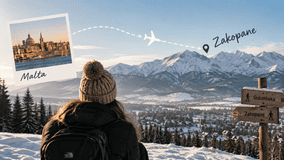
Try to picture it: stepping outside and the ground doesn’t just look different, it sounds different — that particular soft crunch under your shoes that doesn’t exist anywhere in Malta. The air is cold enough to feel in your chest before you’ve even noticed the temperature. Everything is quiet in a way that flat, warm islands never are, because snow swallows sound.
If none of that is familiar, you’re not missing some obscure experience — you’re missing something almost nobody in Malta has. Officially, snow has settled on the ground there only about seven times in the last two hundred years, and the most recent confirmed occasion was the 31st of January, 1962. Unless you’re old enough to remember it yourself, snow simply isn’t part of what winter means where you’re from.
Zakopane, tucked into Poland’s Tatra Mountains, is about as complete an answer to that as you’ll find within a two-and-a-half-hour flight.
Why Zakopane, Specifically
If snow is what you’re after, Malta to almost anywhere cold is a plausible option on paper — so it’s worth being honest about why Zakopane earns a place on that shortlist rather than somewhere else.
The practical case is straightforward: Malta to Krakow is a genuine direct route, not a connection stitched together through a third airport. Ryanair, Malta Air and Buzz between them run it daily, roughly 23 flights a week, with one-way fares that have dropped as low as €17 and a flight time of around two and a half hours. Compare that to flying toward the Alps or further into Scandinavia, where a direct Malta route either doesn’t exist or the fares sit in a completely different league, and Zakopane starts looking less like a compromise and more like the obvious choice.
The character of the place matters too. Zakopane is a real mountain town, not a resort built purely for tourism — the kind of place with its own restaurants, its own rhythm, and locals who live there year-round rather than a purpose-built strip of hotels. It’s also considerably gentler on the wallet than most Alpine resorts, and at this scale, you’re not competing with the sheer volume of visitors that somewhere like the French or Austrian Alps pulls in every winter. None of this is a knock on those places — they’re excellent for what they offer. It’s simply that if what you specifically want is an accessible, affordable, unmistakably real taste of snow and mountains, Zakopane does that particular job as well as almost anywhere in Europe.
The Contrast, in Real Numbers
A Maltese January averages around 16°C during the day, and a real frost is rare enough to make the news when it happens. Zakopane in January looks nothing like that: genuine winter, snow settled on rooftops and pine trees, mountains that are actually white rather than green. Standing in one and imagining the other feels almost like two different planets, and that gap is exactly the point.
What It Actually Feels Like, If This Is Genuinely New
Most advice aimed at “warm-climate visitors going somewhere cold” is written for anyone, which means it’s written for no one in particular. Here’s what actually changes when the last cold thing you’ve touched was ice in a drink, not a hillside.
Cold changes how your body wants to move. In Malta, walking is walking. On packed snow or ice, your instinct to walk normally is exactly wrong — shorter steps, a bit more weight through your heels, and shoes with real grip underneath you make the difference between finding your feet and not. It takes maybe twenty minutes of actually being out there before it starts to feel natural rather than deliberate.
The cold itself surprises people less than the dryness does. Malta’s air carries humidity almost everywhere you go; mountain winter air is dry, and dry cold has a different bite to it — it reaches your lungs and the inside of your nose in a way sea-level Mediterranean cold never does. A scarf or buff pulled up over your mouth and nose on the coldest mornings actually helps, not for warmth alone but for taking the edge off that specific sensation.
Then there’s the light. Snow reflects an enormous amount of sunlight back upward, so a clear day in the mountains can feel brighter than a summer afternoon on the seafront, in a way that catches people off guard. Sunglasses aren’t a summer-only item here.
And one thing nobody tells you: the quiet. Snow absorbs sound in a way that really changes how a place feels — footsteps go soft, voices carry less, and a mountain town in winter has a stillness to it that a Mediterranean island, with the sea always somewhere in the background, simply doesn’t have. It’s one of the things people from Malta mention most often afterward, and it’s not something any packing list can prepare you for.
Making Snow Something You Do, Not Just Something You See
For a lot of first-time visitors, seeing snow through a window on the drive in is already the whole trip made worthwhile. If you’d rather it be something you actually do rather than watch, our Zakopane snowmobile day trip puts you directly on it — easily one of the more memorable ways to meet snow for the first time, rather than just standing next to it for a photo. For a gentler introduction, our small-group Zakopane day trip covers the Gubalowka cable car, the town itself, and a stop at the thermal baths, so you get a full day in the mountains without needing any prior experience of the cold at all.
Good to Know
Malta uses the euro; Poland uses the zloty, so it’s worth carrying a small amount of local currency or using a card that doesn’t charge foreign transaction fees. English is spoken and understood widely across both Krakow and Zakopane, including by us — of everything that’s actually new about this trip, the language isn’t one of them.
Is it really true that Malta hasn’t had snow since 1962?
Officially, yes — records show only a handful of confirmed snowfalls over the last two centuries, with 1962 the most recent. Occasional heavy hailstorms have been mistaken for snow since, but they’re a different thing entirely.
Why fly to Poland specifically, rather than somewhere closer to the Alps?
Mainly accessibility and character: the direct Malta–Krakow route is frequent and notably cheap, and Zakopane is a real, lived-in mountain town rather than a purpose-built resort, at a fraction of typical Alpine prices.
How do I get from Krakow to Zakopane?
Zakopane is a drive south from Krakow into the Tatra Mountains. Our day trips include hotel pickup in Krakow, so there’s nothing to arrange separately once you’ve landed.
Do I need to speak Polish?
No. English is widely spoken across Krakow and Zakopane, and all of our tours run in English.
What should I actually pack if I’ve never dealt with real cold before?
Several thinner layers rather than one heavy coat, boots with real grip for snow and ice, and sunglasses for bright days — the glare off snow is stronger than most people expect.
Is a day trip enough to really experience snow for the first time?
Yes — a well-run day trip covers real snow, mountain scenery, and, if you choose the snowmobile option, actually being out on it, all within a single day from Krakow.